

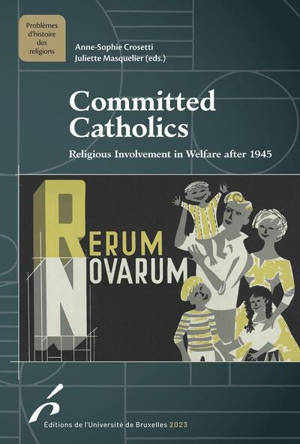
Committed Catholics : religious involvement in welfare after 1945
Committed Catholics
Religious Involvement in Welfare after 1945
The construction of European welfare states after 1945 did not happen without reaction and contribution from private religious actors. Rather than leading to the disappearance of Catholic charities, these developments have led Catholic actors to adapt to a new range of methods, new needs, new audiences, and new sources of funding - as well as to new spiritual incentives and religious meanings attached to commitment.
This issue explores the new forms of Catholic social commitment in the post-war period, from the perspective of the actors involved. Through case studies from several national contexts and different sectors of healthcare, social services and education, it highlights the coexistence of a variety of actors - charities, public and private parties, lay and religious, men and women, professionals, activists and volunteers - and multiple strategies for articulating religious values in welfare work.
Addressing major transformations such as secularisation, and the professionalisation of assistance, this collection of articles complicates the binary oppositions between charity and activism, between professionals and volunteers, in order to highlight the various forms of religious commitment that flourished in Catholic welfare and contributed to the profound changes in society in the second half of the twentieth century.
(sous réserve de confirmation)
Largeur : 16.0 cm
Epaisseur : 1.4 cm